
What if their sounds became stories?
Are you listening?
Songs of the Humpback Whale helped end large scale whaling and proved that listening leads to change.
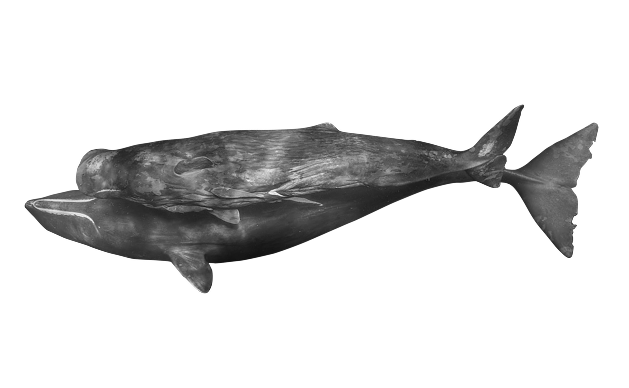




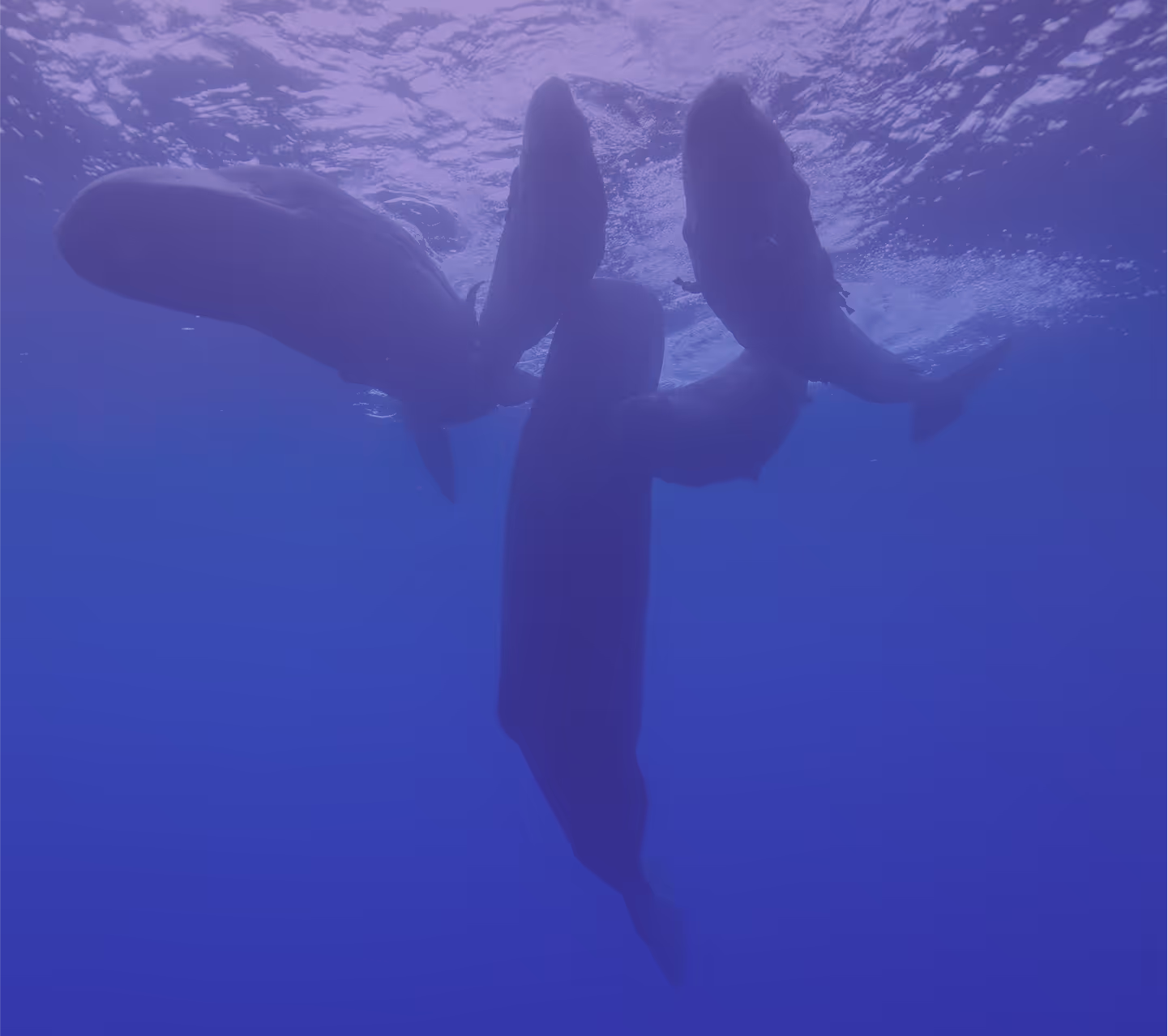
Born in 2018, Hope is a female calf and the future of her family's matriline, Unit U. She is learning the lessons of the Caribbean sperm whales and how the Eastern Caribbean Clan lives. Canopener, a young adult female, is a social and playful new mother named for a distinct nick in her tail which looked like an old-fashioned, manual can opener (as seen in the bottom right of the image).
Information provided by the Dominica Sperm Whale Project.
“I’ve often pondered what it would take to spark a new conservation movement… A movement that inspires a new generation, gives voice to the marginalized, and uses science to inspire awe...”
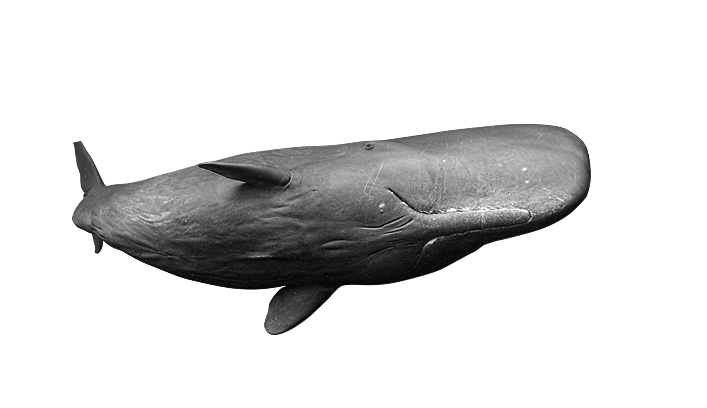
Snow is a young female in Unit A who has yet to give birth. But in 2023, CETI observed a birth in her family and documented the birth event from both above, using aerial drones, and below the surface with underwater microphones.
Information provided by the Dominica Sperm Whale Project.
With machine learning and gentle robotics, we’re turning sound into meaning, and meaning into action.
Press play on a different world
Using a network of deep underwater hydrophones, gliders, and ultra-gentle nature-inspired custom whale tags, CETI has built an ‘underwater recording studio’ to listen more closely to whale voices than ever before.
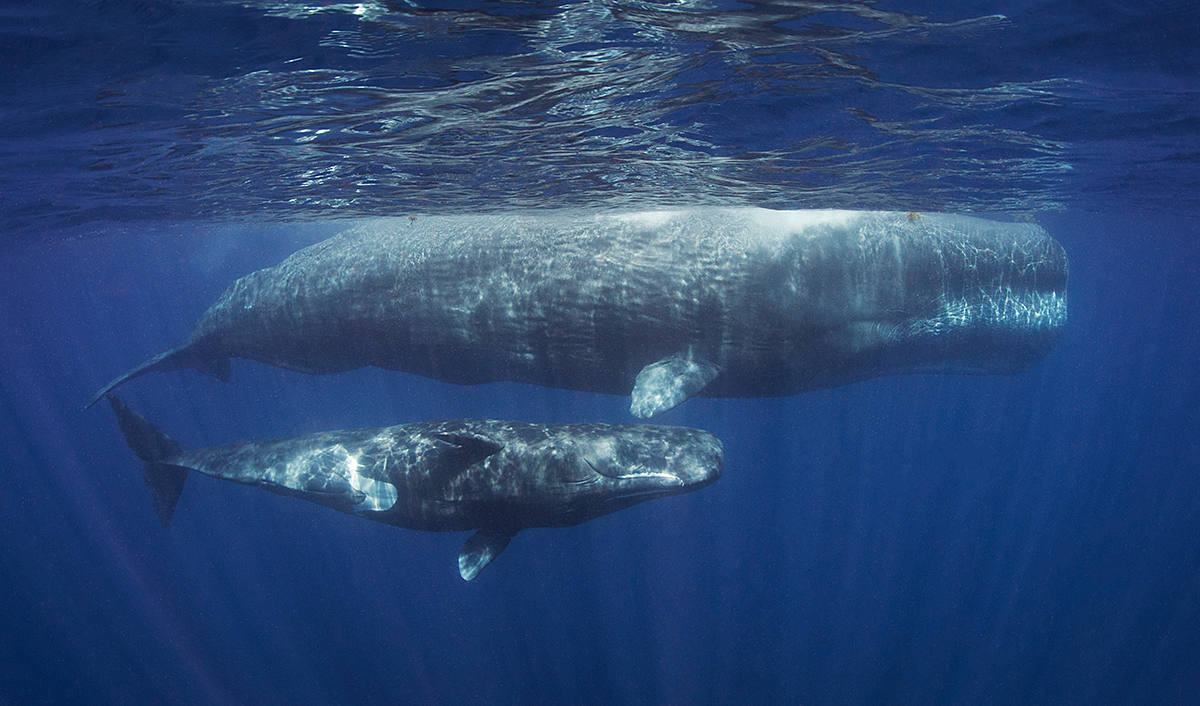
On July 8, 2023, the Project CETI team encountered 11 sperm whales (8 adults and 3 calves) from a well-studied unit off the coast of Dominica. When we first encountered the whales and began recording video and audio with our aerial drones and synchronized hydrophones, their behavior seemed different than usual. What we then witnessed was surprising – a sperm whale birth. Over six hours we documented the most extensive dataset of any cetacean birth ever recorded. The group of whales (who included both family and non-family) worked collaboratively to keep the newborn afloat for several hours, until its fluke unfolded and it could swim properly.
We observed notable changes in vocal patterns surrounding the birth, including during interactions with pilot whales that occurred shortly afterward. The only other time a sperm whale birth was even witnessed by scientists was in 1986, with a few other scattered observations made while hunting whales. The most frequent coda type during the birth (1+1+3, or Type 3) is thought to relate to the social identity of the Eastern Caribbean Clan, the group these whales belong to.
.avif)
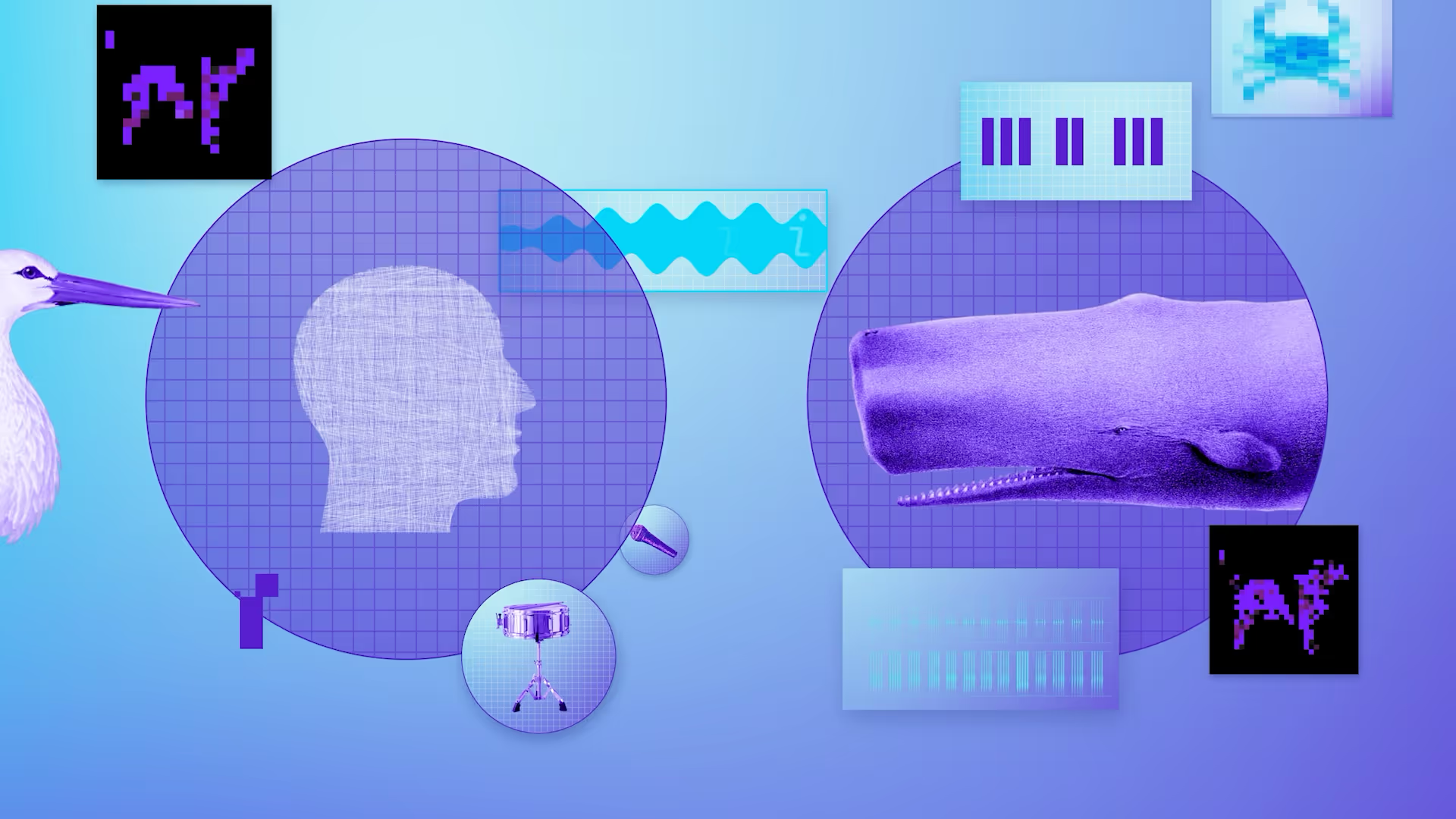
While sperm whale vocalizations may sound nothing like human speech—they produce clicks that emit from the top of their heads. Yet, when examining their spectral properties closely, CETI Linguistics Lead Professor Gašper Beguš found striking parallels between whale clicks and human vowels. Just as humans use mouths and vocal cords to shape sounds, whales use phonic lips and an air sac, which they manipulate in a similar way.
At first, their clicks seem entirely unlike our vowels. That’s because whale clicks are slow, while human vowels are fast. By removing the silences between clicks and speeding them up to match the tempo of human speech, clear patterns and a resemblance began to emerge and the patterns closely resemble our vowels.
CETI has already identified two such vowel-like sounds—corresponding to the human “a” and “i”—being used in whale communication. These patterns are so distinct and consistent that you can literally transcribe them.
Click here for coda and vowel visuals.
.png)
In 1970, Dr. Roger Payne released the album “Songs of the Humpback Whale,” which served as an anthem for the Save the Whales movement and became the bestselling environmental album in history. These whale songs were given to Roger a few years earlier by Frank Watlington, a Navy engineer. Roger carefully wrote out “Listening Instructions” that accompanied the album. In the fall of 2019, Roger visited Dr. David Gruber, CETI’s Founder and Lead in New York City and handed him a box of compact discs. Inside were recordings from Payne’s decades of oceanic exploration. Among them was a notable disc labeled “Humpback Tape 2, April 28, 1964 – Frank Watlington”.
Watlington, a U.S. Navy engineer stationed in Bermuda during the Cold War, was originally tasked with eavesdropping on Soviet submarines and monitoring dynamite blasts via hydrophones (underwater microphones). But in the early 1950s, his equipment began picking up something unexpected: unfamiliar, melodic sounds echoing through the ocean. Watlington soon realized he was hearing the vocalizations of humpback whales swimming nearby.
More than a decade later, in 1967, after the recordings were declassified, Watlington passed them on to a trusted friend—Roger Payne—who was also conducting marine research in the area.
With Songs of the Humpback Whale, mediation occurs on several levels: through the ocean itself, through Watlington’s Cold War-era hydrophone technology, and through the choices made in track editing. As anthropologist Stefan Helmreich notes, “To think transductively demands inquiry into the very histories and languages that organize conceptions of sensing—and is, therefore, an endeavor in dialogue with the anthropology of sensing more generally.”
So while the recordings may seem raw or “natural,” they are deeply embedded in human context. They are not just documents of nature—they are products of it, captured and shaped by human hands, culture, and history.
Echoes through time
For centuries, we’ve looked to animals, hoping to understand their voices and their worlds. Today, we have the chance to be the generation that finally does.
CETI’s vision to reframe our connection to the natural world is part of a timeless journey rooted in listening.
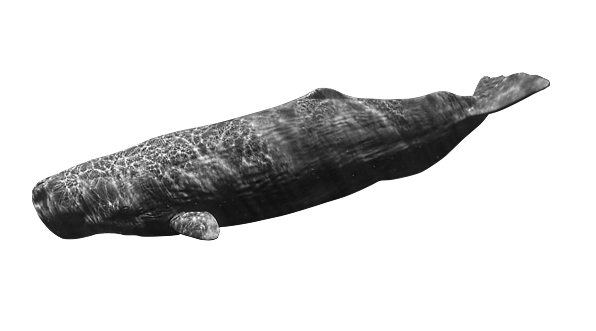
One of three young females in Unit R, Rap is a playful and curious juvenile. Her mother Rip is among the largest female sperm whales observed off of Dominica.
Information provided by the Dominica Sperm Whale Project.
Return the call
Listen closely. Learn deeply. Act meaningfully.




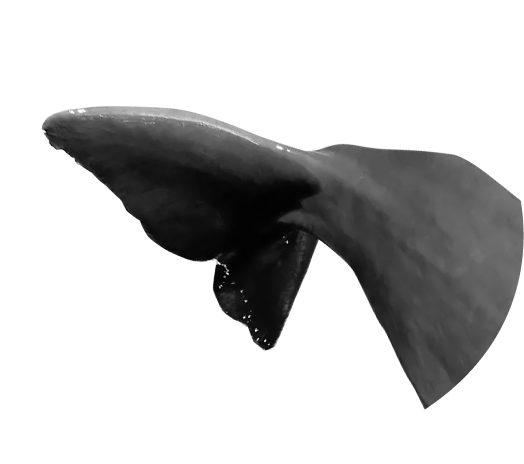
Drifter, an elder female from Unit D, is the sperm whale with the longest photo record in our dataset, with her first identification dating back to 1984.
Information provided by the Dominica Sperm Whale Project.
Explore the science, meet the whales, and uncover the future of interspecies communication with the latest articles, research, and updates from Project CETI.
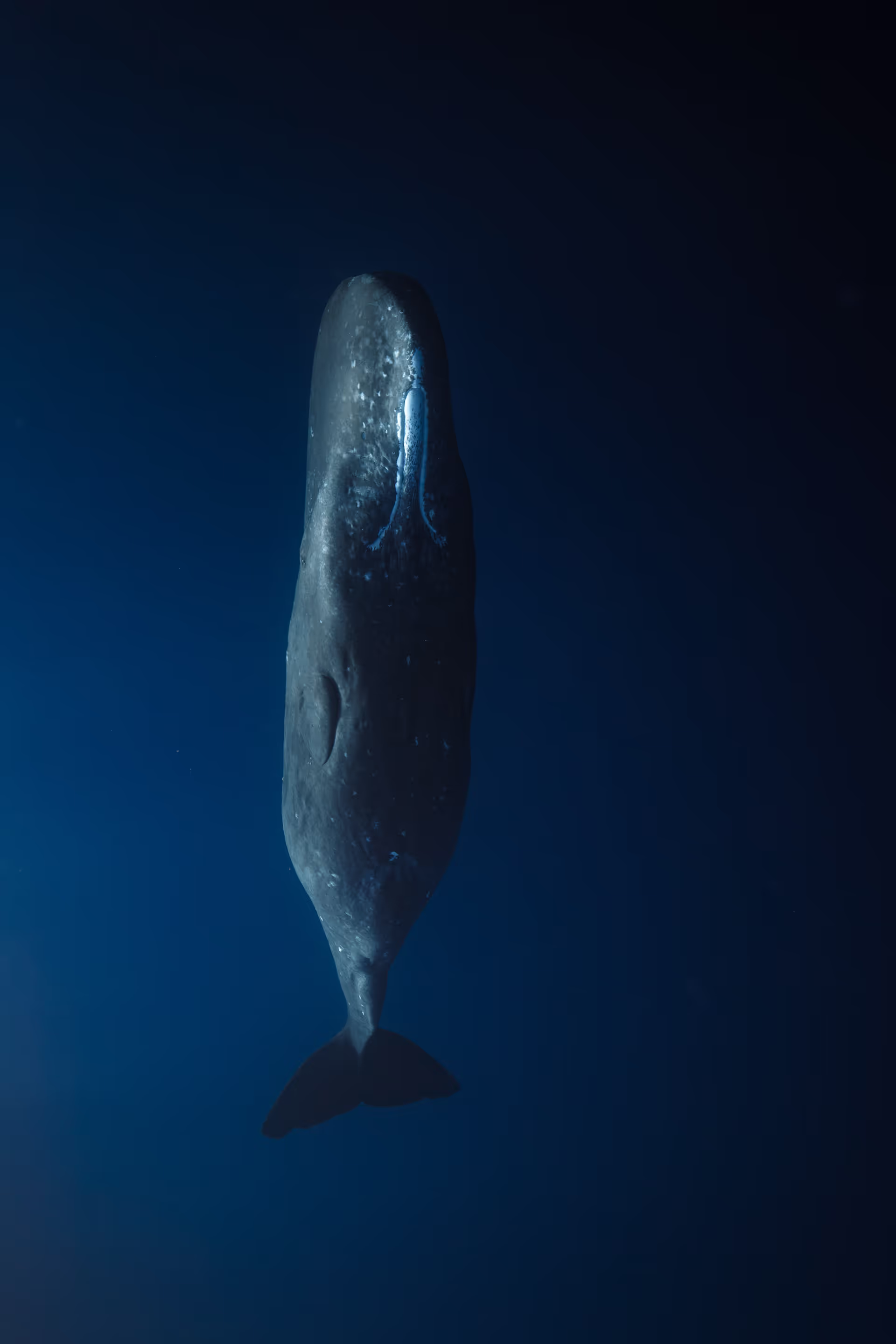
Careful Listening for Decoding the Deep
CETI presents WhAM, a major milestone in the scientific exploration of bioacoustics and interspecies communication.
.avif)
Partnership with the National Geographic Society
Project CETI and the National Geographic Society have embarked on an epic odyssey to translate the language of sperm whales using advanced machine learning and gentle robotics; providing the first-ever blueprint of another species’ language. This collaboration advances groundbreaking research while inspiring public understanding to build a healthier planet through joint efforts across storytelling, new technologies, education and empowering the next generation of leaders.